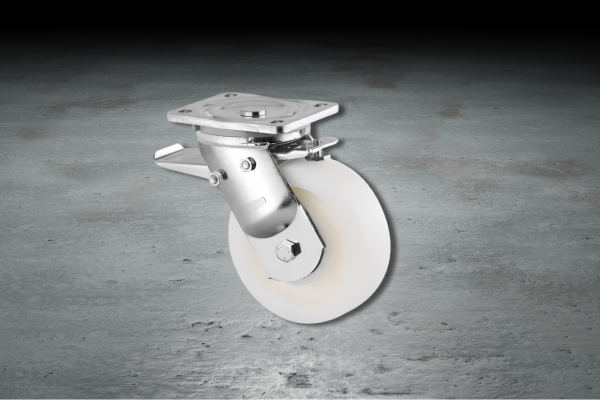
A castor that lasts for years in one application may fail within a month in another, even if they are both carrying the same weight. The quality of the castor usually isn’t the difference; it’s how well the castor has been matched to the working environment. This is why it is important to consider a castors lifespan and what affects it to improve workplace performance and safety.
It's Not Just About Weight
Many people think that if the castors load rating isn’t exceeded, it will avoid any issues, but load capacity is only one part of the equation.
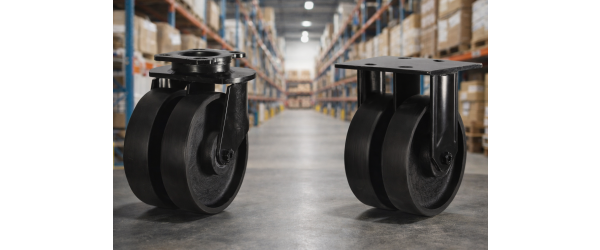
Industrial castors are frequently exposed to dynamic movement, from uneven flooring to crossing thresholds. If these movements and impacts are repeated often, they can shorten the life of the castors.
How the load is distributed is also a factor to consider. If the load is distributed unevenly then one or two of the castors could be carrying more weight than expected.
When selecting castors for an application, factor in additional capacity to provide an extra margin of safety and help extend their service life.
The Floor Beneath the Wheel Matters
Floor conditions can have a large impact on castor lifespan.
Smooth surfaces such as epoxy and polished concrete place relatively little stress on wheels, which allows them to roll freely with minimal wear. Uneven surfaces such as rough concrete, damaged flooring and outdoor surfaces create constant vibration and impact. This causes accelerated wear on both the wheel material and the bearings.
Different wheel materials also react differently to various surfaces.
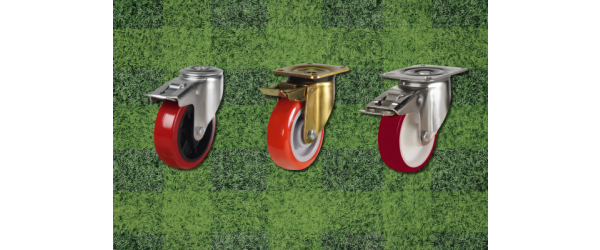
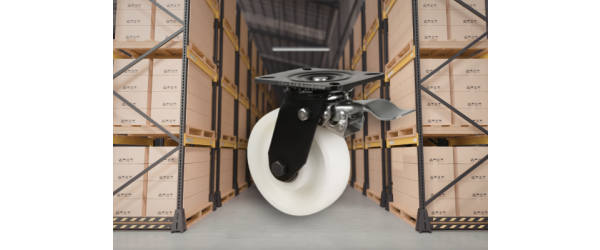
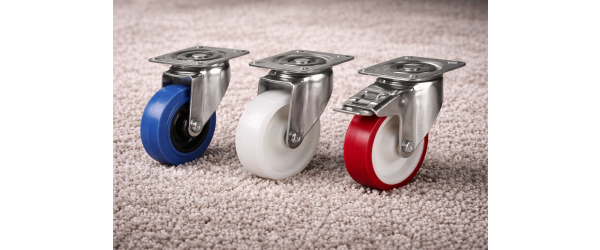
Soft rubber wheels absorb shock well but may wear faster under heavy industrial use. Polyurethane wheels offer excellent durability while still protecting many floor surfaces. Nylon wheels cope well with heavy loads but perform best on smooth, hard floors where vibration is less of a concern.
Selecting the right wheel material for the operating environment is just as important as selecting the correct load capacity.
How Often Is the Equipment Used?
You can’t guarantee that every castor will experience the same workload, so this also needs to be considered when selecting castors.
Some equipment will be used daily, while other equipment may only be moved once or twice a week. If your equipment is continually moving, it creates heat in the bearings, increases wheel wear and places greater demands on the swivel mechanism. If your equipment is going to be in constant use it should be matched with castors designed for higher duty cycles.
The Working Environment Plays a Major Role
Depending on your working environment, there can be a variety of different challenges for your castors.
Moisture can encourage corrosion if unsuitable materials are used. Cleaning chemicals may attack certain wheel compounds. High temperatures can soften some materials, while freezing conditions may cause others to become brittle.
Dust and debris can also work their way into bearings and swivel mechanisms, increasing friction and accelerating wear.
Correct Installation Makes a Difference
Even if you choose the best castor for the application, the flooring is suitable and you work in a clean environment, a castors lifespan can be shortened if it is not fitted correctly.
Mounting plates should sit flat against the equipment frame, with all fixings tightened evenly. If a castor is mounted at an angle or fitted to a distorted surface, the wheel may not track correctly. This can place stress on the bearings and the wheel.
If you are replacing any of your castors, it is important that they correctly match each other. Mixing different wheel diameters or bracket styles can cause uneven loading, making one castor carry more weight than the others.
Choosing Castors That Last
There is a combination of factors that affect a castors lifespan. The combination of load, floor conditions, operating environment, frequency of use and correct installation all influence how long a castor will perform reliably.
If you're unsure which solution is best for your application, browse our full range of castors or contact our team for expert advice on selecting the right castor for your equipment.