Choosing the right castors is not just about load capacity or size. One of the most important factors, and one that is often overlooked, is how the wheel material interacts with the floor surface.
Using the wrong type of castor can lead to damaged flooring, difficult movement and unnecessary wear on both the wheel and the equipment. On the other hand, matching the correct material to your floor type can improve efficiency, reduce noise and extend the lifespan of your castors.
Why Floor Type Matters
Different floor surfaces create different levels of resistance. A smooth concrete floor behaves very differently to carpet, while delicate surfaces such as wood or tiles require additional care.
Castor wheel materials vary in hardness, grip and shock absorption. These characteristics determine how easily equipment moves and how much impact is transferred to the floor.
If the material is too hard for the surface, it can cause damage and noise. If it is too soft, it may create resistance and make movement more difficult. Getting the balance right is key.
Castors for Hard Floors
Hard surfaces such as concrete, tiles and wooden flooring are common in warehouses, retail spaces and hospitality environments.
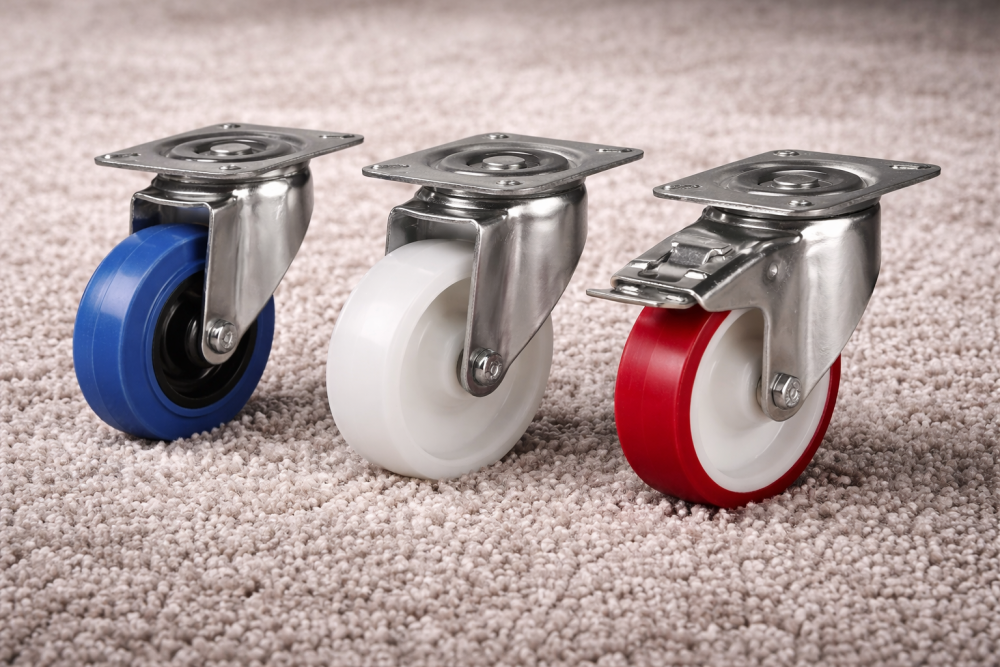
For these floors, softer wheel materials tend to perform best. Rubber and polyurethane wheels are popular choices because they provide a smoother, quieter ride while helping to protect the surface from marks and scratches.
These materials also offer a level of shock absorption, which is useful when moving equipment over slightly uneven areas. You can explore suitable options in our range of single castors, where different wheel materials are available for a variety of applications.
Castors for Carpeted Floors
Carpeted surfaces create more resistance than hard floors, which means softer wheels can struggle to move efficiently.
In these cases, harder materials such as nylon are often the better choice. They reduce drag and allow equipment to roll more easily across the surface.
This is particularly useful in office environments where chairs, storage units or mobile equipment need to move freely without excessive effort.
Castors for Uneven or Outdoor Surfaces
Outdoor areas or uneven flooring present a different challenge. Surfaces may include paving, gravel or worn concrete, all of which can affect movement.
Larger wheels or pneumatic options are typically better suited to these conditions. They help absorb shocks and allow equipment to move more smoothly over rough ground.
Choosing the right material in these environments is essential for both performance and durability, as castors are more likely to encounter debris and varying surface conditions.
Castors for Sensitive Flooring
In environments where flooring is a key part of the space, such as hotels, showrooms or high-end retail settings, protection becomes the top priority.
Soft, non-marking rubber wheels are often the safest option. They minimise the risk of scuffs and marks while maintaining quiet operation.
This is especially important in customer-facing areas where both appearance and noise levels contribute to the overall experience.
What Happens If You Choose the Wrong Material
Using the wrong castor material can cause several problems over time.
Floors may become scratched or marked, leading to costly repairs. Movement can become more difficult, increasing the effort required to push or pull equipment. This not only slows down work but also adds unnecessary strain for staff.
Castors themselves may wear out more quickly if they are not suited to the surface they are used on. In some cases, noise can also become an issue, particularly in quieter environments such as offices or hospitality spaces.
Getting the Best Performance from Your Castors
Matching the correct wheel material to your floor type is a simple step that can make a big difference. It improves movement, protects your environment and helps your equipment perform as it should.
If you are unsure which option is right for your setup, taking the time to assess your flooring and usage requirements will always pay off in the long run.
With the right choice, castors become more than just a functional component. They become a reliable part of your day-to-day operation, supporting efficiency, safety and long-term performance.