What Castor Wheels Should Be Used in the Aerospace Industry?
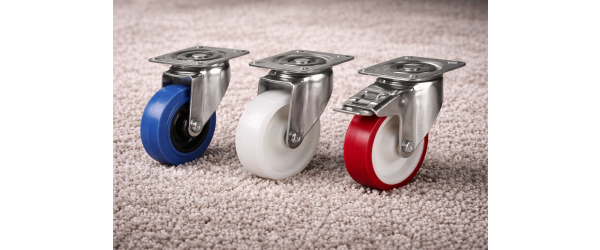
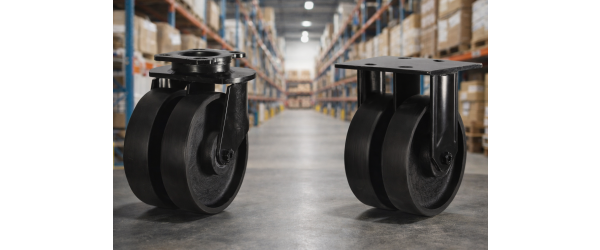
The aerospace industry should use heavy-duty industrial castor wheels designed for high load capacity, durability, and precise movement – especially when the goods being transported are high-value, which is often the case in Aerospace. These castors are typically fitted with polyurethane or rubber wheels and robust braking systems to guarantee strong support for aircraft maintenance, engine stands, and ground equipment.
The environments in the Aerospace industry demand wheels that can safely move extremely heavy equipment while maintaining stability and control. Heavy-duty industrial castors provide the strength, reliability and freedom of movement that is required for this.
In many real-world industrial applications, our castors are essential for handling heavy loads while maintaining mobility. We stock high-quality castors and are a leading supplier to the UK aerospace industry.
Understanding why these castors are required helps understand why they are so essential for the work the industry carries out.
Why Heavy Duty Industrial Castors Are Essential for Aerospace Equipment
Aerospace maintenance involves CONSTANTLY moving large, expensive equipment around aircraft safely and efficiently. This equipment can include platforms, stands, cabinets, inspection rigs, and trolleys. All of these are vital to maintaining an efficient operation.
The loads involved are substantial. A typical commercial aircraft engine can weigh between 2,000 kg and 6,000 kg, while maintenance platforms may carry many tools and parts. Equipment designed to support or transport these components must be fitted with castors capable of reliably handling these loads.
Heavy-duty industrial castors are designed to distribute weight across multiple wheels while maintaining smooth rolling performance. This allows precise, stable positioning of equipment around aircraft or design structures without substantial effort or risk.
Industries that rely on mobility solutions for specialised environments often require castors engineered for smooth and controlled movement. For example, castors used in TV, film, and theatre production must allow heavy equipment and sets to move smoothly and quietly across studio floors. All have different use cases, but the same principles apply… With Aerospace, it's differentiated by a much greater emphasis on strength and load capacity.
Which Wheel Materials Work Best in Aerospace Environments?
Wheel material plays a major role in how castors perform - especially in aerospace facilities. Aircraft hangars typically have smooth concrete floors, which require wheels that can handle heavy loads without damaging the surface.
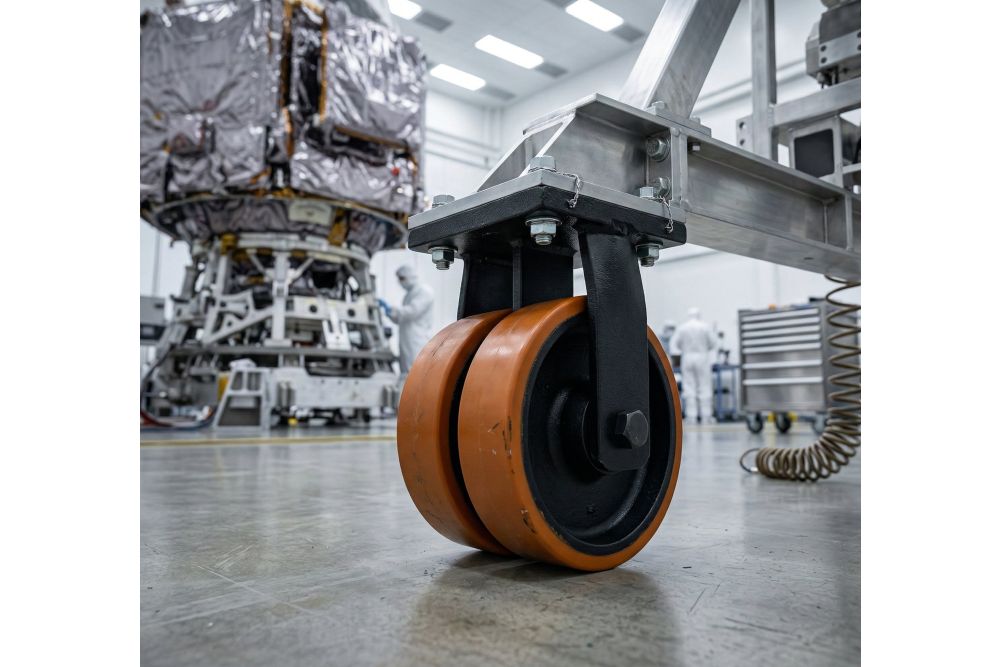
Polyurethane wheels are widely used in aerospace applications because they combine several key benefits and are a popular choice. They offer high load capacity, excellent wear resistance, and smooth rolling performance. They also help protect hangar floors from damage while supporting heavy equipment. The wrong castors can cause floor damage or cause them to fail, resulting in expensive equipment being damaged. The price of quality castors well outweighs the price of repairing things that are worse.
Choosing the correct wheel material ensures that aerospace equipment remains mobile without compromising you, or the equipment’s safety.
Why Braking Systems Are Critical for Aerospace Castors
Once equipment is positioned around an aircraft, it must remain completely stable during maintenance operations. Any movement could create safety risks for workers or damage valuable aircraft components that your business simply cannot afford to risk. For this reason, aerospace equipment often uses heavy-duty industrial castors fitted with stable, strong braking systems.
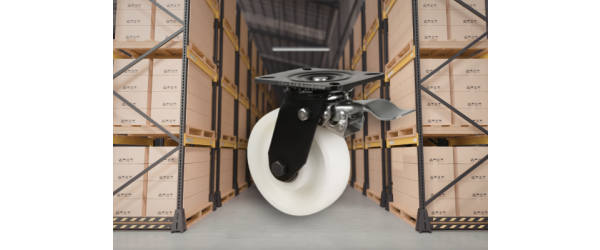
Total lock brakes are commonly used because they prevent both wheel rotation and swivel movement. This ensures that equipment remains firmly in place once positioned. Directional locks can also be used sometimes, which helps guide equipment in straight lines when moving through tight or busy workspaces.
How the Right Castors Improve Aerospace Efficiency
Aerospace operations are tightly scheduled. Airlines depend on quick turnaround times to keep aircraft in service, and maintenance teams rely on equally efficient equipment to complete their work.
Heavy-duty industrial castors contribute to efficiency by allowing equipment to move quickly and safely around the hangar. Smooth rolling wheels reduce the effort required to move heavy systems, while strong braking mechanisms ensure stability during maintenance tasks.
Although castors are small components compared with the equipment they support, they play an important role in keeping aerospace operations running smoothly. If one goes down, it can be catastrophic.
Frequently Asked Questions
What type of castor wheels are used in the aerospace industry?
The aerospace industry typically uses heavy-duty industrial castor wheels with high load capacities. These castors are commonly fitted with polyurethane or rubber wheels and strong braking systems to support aircraft maintenance equipment and ground support machinery.
Why do aerospace castors need high load capacity?
Aerospace equipment such as engine stands, maintenance platforms, and ground support trolleys often carries heavy loads. Commercial aircraft engines alone can weigh several tonnes, so the castors supporting related equipment must be capable of handling these weights safely.
What wheel material is best for aerospace castors?
Polyurethane wheels are often preferred because they provide high durability, strong load capacity, and smooth rolling performance on hangar floors. Rubber wheels may also be used when vibration reduction is required.