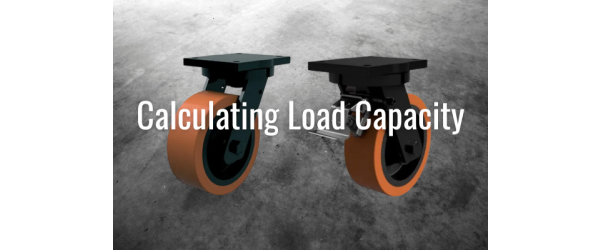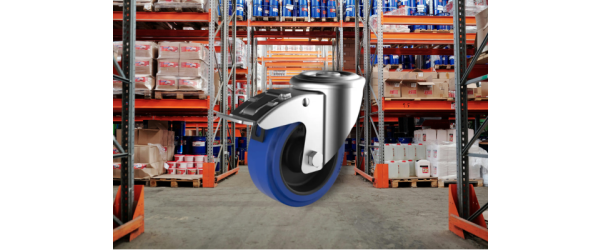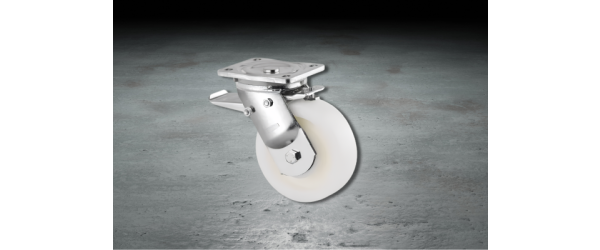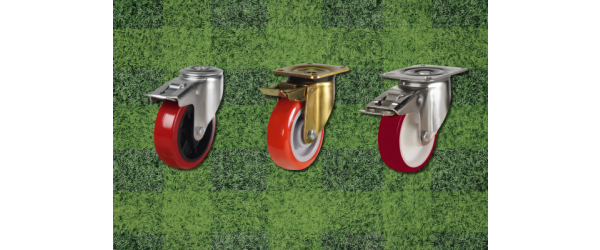
One of the key factors in choosing the correct castor is deciding whether to use swivel castors, fixed castors, or a combination of both.
Each different type affects how equipment moves, turns and handles in everyday use. Choosing the right wheels for your equipment improves safety, reduces operator effort and makes sure they perform reliably over a longer period of time.
What Are Swivel Castors?
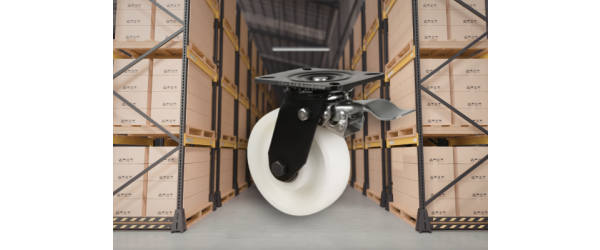
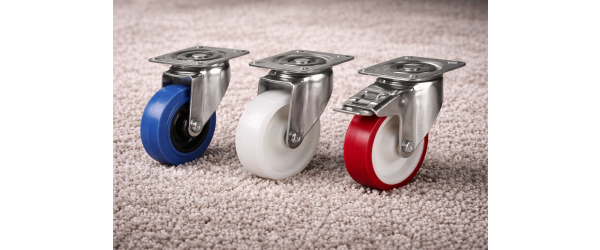
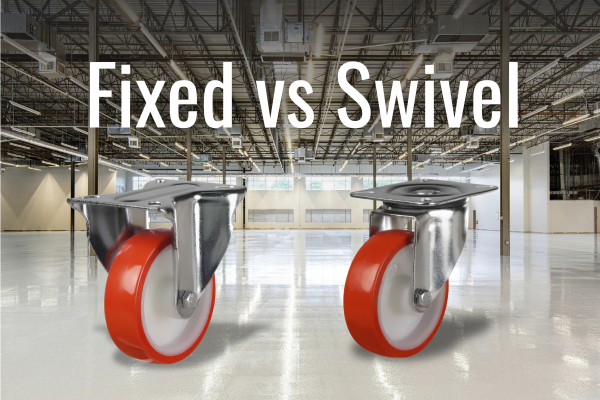
Swivel castors have a rotating head that allows the wheel to turn through 360 degrees. This makes them ideal for equipment that needs to move in different directions, turn in tight spaces or be positioned accurately.
They are commonly used on:
- platform trolleys
- catering equipment
- mobile workstations
- hospital equipment
- retail displays
- warehouse picking trolleys.
Swivel castors can be turned, pulled, pushed and guided around obstacles with a lot less effort than with fixed castors alone.
What Are Fixed Castors?
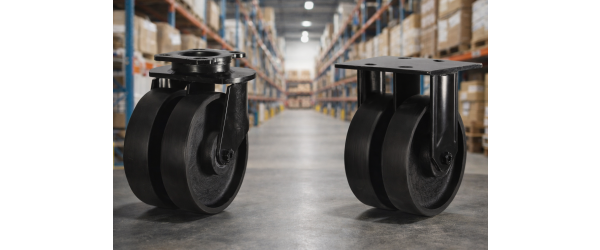
Also known as rigid castors, fixed castors are mounted in one direction, allowing them to only move forwards and backwards. They do not rotate sideways in any way, unlike swivel castors
They are better suited to heavy loads, long travel distances and applications where moving in a straight line is important.
Fixed castors are commonly used on:
- heavy-duty transport trolleys
- industrial carts
- manufacturing equipment
- warehouse transport units
- material handling systems.
Their main benefit is directional control. Fixed castors help keep equipment moving in a straight line with fewer steering corrections.
When Should You Use Swivel Castors?
If flexibility is needed, then swivel castors will usually be your best choice.
If your equipment needs to turn frequently, move through narrow spaces or be positioned with a lot of accuracy, swivel castors help make that possible and provide the control to do it reliably.
Swivel castors also help reduce manual handling strain, as users don’t need to lift, drag or force equipment into the correct position. If you require extra safety, many swivel castors are available with brakes that lock the wheel.
When Should You Use Fixed Castors?
Fixed castors are better suited to applications where stability and straight-line travel matter most.
If you’re moving heavy loads over predictable routes such as through warehouses, factories and distribution centres, fixed castors make sure your movements are steady and reduce sideways movement.
Fixed castors are simpler in design than swivel castors, which can make them more durable and lower maintenance for demanding environments.
Why Many Trolleys Use Both
A lot of trolleys use a combination of both, usually two fixed castors and two swivel castors. This arrangement allows steering from the swivel castors while also giving the trolley stable tracking from the fixed castors.
This setup is popular because it balances both control and manoeuvrability. For larger or heavier equipment, the configuration may need to be slightly adjusted to suit the load, floor space and surface.
Factors to Consider
Before you choose your castors, there are many factors to consider:
- Load weight
- Distance travelled
- Available space
- Floor surface
- Movement frequency
- Required manoeuvrability
Knowing how your equipment will be used day to day is the easiest way to choose the right castor setup. A trolley used in tight aisles will have different requirements from equipment carrying heavy loads in a large warehouse.
Making the Right Choice
There is not a single answer to which is the best option between swivel and fixed castors. The right choice completely depends on the application.
In short, if flexibility and manoeuvrability are your priority, choose swivel castors. If you need control and straight-line stability, then fixed castors are your best choice. However, for many, combining both swivel and fixed castors offers the most practical solution.