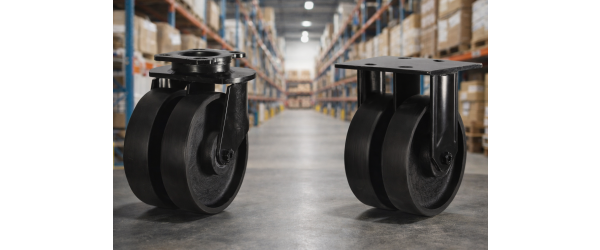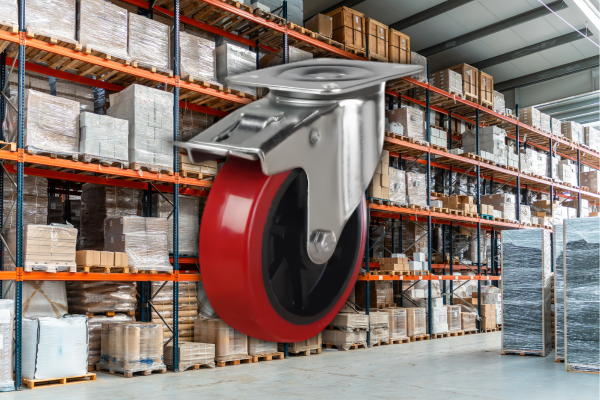
Castors play a crucial role in keeping operations running smoothly. They are often overlooked until they start causing problems. When they stop working effectively for their task, they can quietly increase costs across your business.
Here are five signs that your castors may be costing you money.
1. Equipment Is Harder to Move
Worn bearings, damaged wheels or debris build-up can all increase rolling resistance. This means that staff will have to use more effort to push or pull equipment.
This not only slows down routine tasks, but it also puts unnecessary strain on employees. If you take into account an entire warehouse or workshop, those lost minutes can quickly add up.
Upgrading to suitable industrial castors can help restore smooth movement and improve productivity.
2. You're Seeing More Floor Damage
If you’re using damaged or unsuitable castors, they can cause scratches, scuffs and wear to flooring surfaces. This is most common when wheels develop flat spots or when hard wheel materials are used on sensitive floors.
Repairing floors can be costly and very disruptive so preventing damage is a much better option. When choosing castors, it is important to consider the surface they will be on and select the most suitable option, this protects both your equipment and premises.
3. Your Castors Are Making Excessive Noise
If you’re hearing squeaking, rattling and grinding noises this often indicates that your castors are reaching the end of their service life.
Noisy castors can indicate worn bearings, loose components or wheel damage. Apart from being disruptive, these issues can affect efficiency and can lead to more serious failures if left unresolved.
This can be an even bigger issue in workplaces where customer experience matters, such as retail stores or hospitality settings. Quieter equipment contributes to a more professional environment.
4. Repairs Are Becoming Frequent
If you’re having to regularly repair your castors or replace individual parts, it may be time to consider a complete replacement.
Small, occasional repairs may seem cost-effective but repeated maintenance can quickly exceed the cost of fitting new castors. When carrying out repairs, downtime and labour costs should also be considered.
Investing in quality castors as replacements often provides better long-term value and reliability.
5. Safety Concerns Are Increasing
Possibly the biggest issue for your business is when castors begin creating safety risks.
Unstable wheels, damaged brackets or castors that struggle under load can make equipment unsafe. This in turn increases the risk of accidents, damaged stock and employee injuries.
By carrying out routine inspections, you can help identify issues before they become a more serious safety hazard. Don’t wait until it’s too late, replacing worn castors is a simple step that improves both safety and operational efficiency.
Don't Ignore the Warning Signs
While castors may seem like a small part, their impact on your business can be significant. A reduction in productivity, damage to your floor, ongoing maintenance and safety concerns all carry hidden costs.
To prevent unnecessary costs it is important to regularly inspect your castors and replace them when necessary. This keeps your equipment moving smoothly, increases productivity and improves workplace safety.
If you're unsure whether your current castors are fit for purpose, explore our wide range of castor wheels available, designed for both light and heavy-duty applications.