When people think about the TV and film industry, they picture cameras, lights, actors, and impressive sets. What rarely gets a mention are the castors quietly doing the hard work underneath it all.
Yet without the right TV studio castors and production castors, modern studios simply would not function. From camera dollies and lighting rigs to scenery flats and flight cases, mobility is what keeps a production moving – often literally.
In this guide, we will look at why castors are undervalued in the industry and, importantly, what castors to use for TV, film and studio environments.
The Hidden Role of Castors in TV and Film
Every production environment is built around flexibility. Sets change. Equipment moves. Layouts are reconfigured daily, sometimes hourly.
In a busy studio, you might find:
• Camera dollies tracking talent across the floor
• Lighting towers repositioned between takes
• Sound equipment moved to reduce interference
• Scenery rolled on and off stage
• Flight cases transported between locations
All of this relies on high-quality production castors designed for smooth, controlled and quiet movement.
Without them, every adjustment would require lifting heavy equipment, increase setup time, and risk damage. Castors reduce manual handling, improve efficiency and allow crews to adapt instantly to creative demands.
Why Castors Are Often Undervalued
Castors are often specified late in a project, as an afterthought. The focus is understandably on cameras, lighting technology and set design. But if the wheels underneath are wrong, even the most advanced equipment becomes difficult to manage.
Common problems caused by poor castor selection include:
• Noise during filming
• Marks or damage to studio floors
• Equipment drifting out of position
• Vibration affecting camera stability
• Premature wear under heavy loads
In a professional studio, these issues cost time and money. The right TV studio castors prevent these problems before they arise.
What Castors to Use for TV and Film
If you are asking what castors to use for TV/film, the answer depends on three main factors: load, surface and noise control.
1. Smooth and Silent Movement
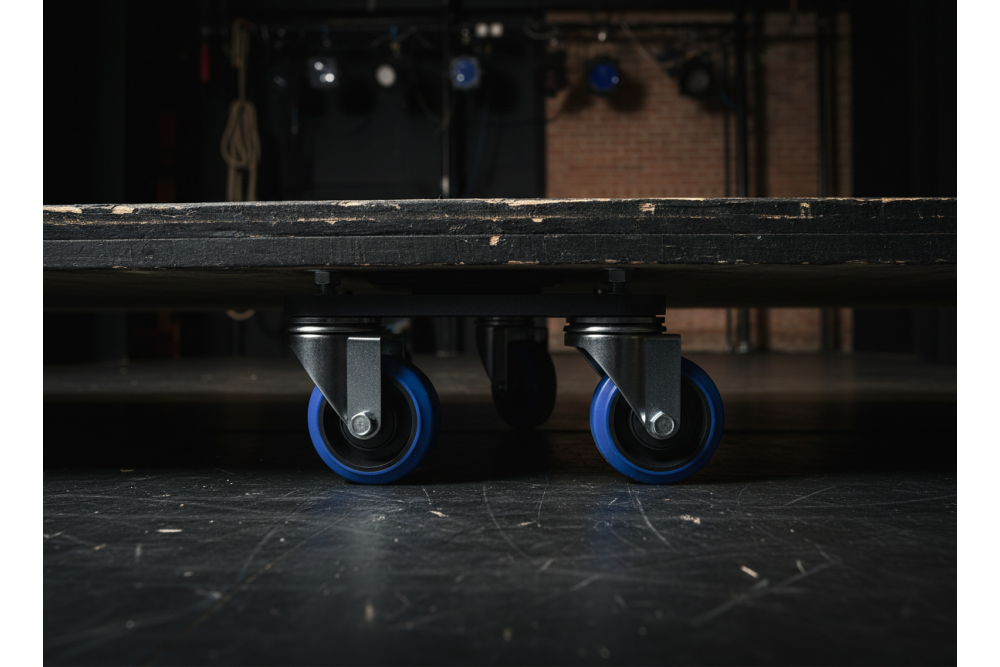
Studios are controlled acoustic environments. Even small sounds can be picked up by sensitive microphones. That is why many productions use rubber or polyurethane wheels that offer quiet, non-marking movement.
Our range of TV & Film castors is specifically designed for studio use, including options for camera rigs, lighting stands, and scenery.
For tracking shots and moving camera platforms, purpose-built camera dolly castors provide precision rolling and reduced vibration, helping operators achieve smooth footage.
2. Load Capacity and Durability
Production environments are demanding. Equipment is heavy and frequently moved. Production castors must withstand repeated use without flat-spotting or degradation.
Polyurethane wheels are often a popular choice for heavier applications because they combine strength with floor protection. For particularly robust requirements, such as large scenery pieces or scaffold structures, heavy-duty castors from our TV & Film & Theatre section deliver the required strength without compromising manoeuvrability.
3. Floor Protection
Most studios invest heavily in high-quality flooring to create smooth tracking surfaces. The wrong wheel material can leave marks or cause damage over time.
Non-marking rubber and polyurethane wheels are typically the safest choice for studio floors. They distribute weight effectively and reduce the risk of indentation.
4. Braking and Stability
Another key consideration when choosing castors for a studio is braking performance.
Once a lighting rig or camera platform is in position, it must stay there. Castors fitted with total-stop brakes prevent both wheel rotation and swivel movement, keeping equipment secure during filming.
You can view brake options within our TV and production caster range, ideal for controlled studio environments.
What Castors to Use for Studio Scenery and Sets
Scenery and staging present slightly different demands. Movement should be smooth but discreet. In television studios, especially, bright lighting can reflect off shiny hardware.
Many TV studio castors are manufactured with matt finishes on brackets and wheels to prevent reflections under studio lights. This small detail can make a significant difference on camera.
For larger scenic elements, scenery skates and specialised staging wheels from our production castor range allow heavy structures to be repositioned efficiently between scenes.
Again, it comes back to selecting castors as part of the design process, not as an afterthought.
The Professional Advantage of Getting It Right
When production castors are properly specified, crews benefit from:
• Faster set changes
• Reduced manual handling
• Improved safety
• Cleaner audio recordings
• Better camera stability
• Longer equipment lifespan
For studios working to tight schedules, those gains add up quickly.
Castors may not appear on screen, but they directly support everything the audience sees. From major broadcast studios to independent production houses, mobility underpins performance.
The Bottom Line
Castors are rarely the headline feature of a production, but they are fundamental to how studios operate. Choosing the right TV studio castors ensures that equipment moves smoothly, quietly and safely, without disrupting filming or damaging valuable assets.
If you are planning a studio build, upgrading equipment, or simply reviewing what castors to use for TV and film applications, it pays to choose purpose-designed production castors that match the demands of the environment.
At Castors Online, we supply a specialist range built specifically for the TV, film and theatre industry – because behind every great production, something has to keep the show rolling
← Back
 ← Back
Why Castors Are Undervalued in the TV and Film Industry
Related Posts
-
How to Calculate the Load Capacity You Actually Need
Choosing the right castors isn’t just about finding the correct wheel size or material. One of the most important factors is ...
-
How Castor Placement Affects Trolley Stability and Handling
When you are choosing castors for a trolley, it is easy to focus on wheel diameter, material and load capacity. While these a...
-
What Really Determines the Lifespan of a Castor?
A castor that lasts for years in one application may fail within a month in another, even if they are both carrying the same ...
-
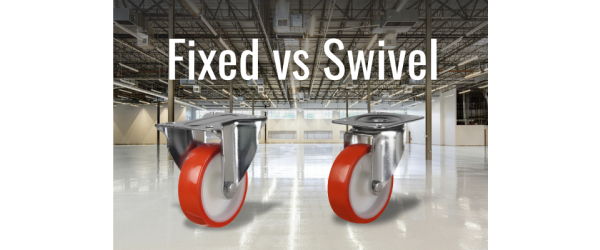
Swivel vs Fixed Castors: Which Should You Choose?
One of the key factors in choosing the correct castor is deciding whether to use swivel castors, fixed castors, or a combinat...
-

How Hot Weather Affects Castors and Wheels: Summer Maintenance Tips
During summer, higher temperatures, sunlight and dust can all affect the performance of castors and wheels. For castors u...
-
5 Signs Your Castors Are Costing Your Business Money
Castors play a crucial role in keeping operations running smoothly. They are often overlooked until they start causing proble...
-
5 Common Warehouse Mobility Problems Solved with the Right Castors
In a busy warehouse, things need to move. Whether it is picking orders, packing them up, or shifting stock from one side to t...
-
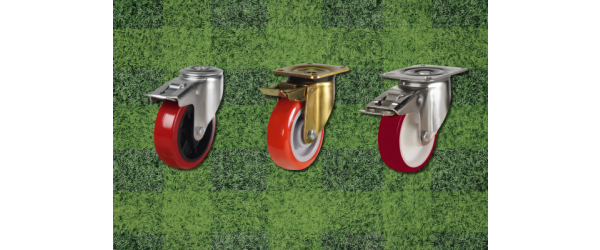
Summer Events and Outdoor Setups: Choosing Weather-Resistant Castors
Summer is one of the busiest times of year for outdoor events, from festivals and markets to weddings and commercial pop-ups....
-
How to Choose the Right Castor Wheels for Heavy Loads
When it comes to moving heavy equipment, choosing the right castor wheels is essential. Whether you are working in a warehous...
-
How to Match Castor Wheel Material to Your Floor Type
Choosing the right castors is not just about load capacity or size. One of the most important factors, and one that is often ...