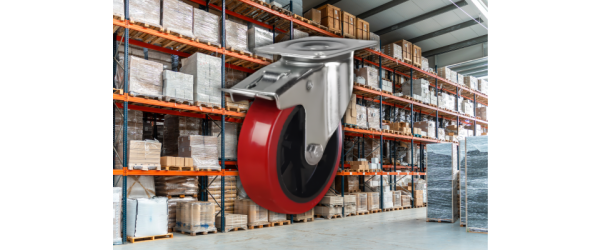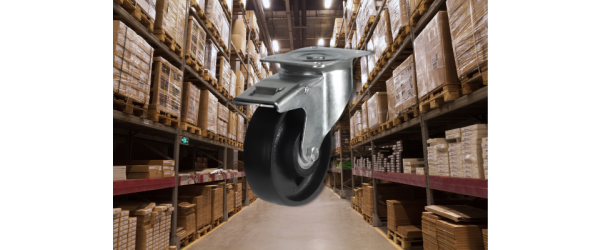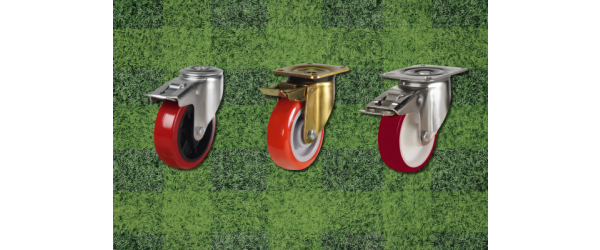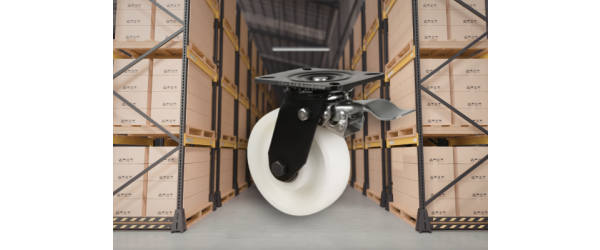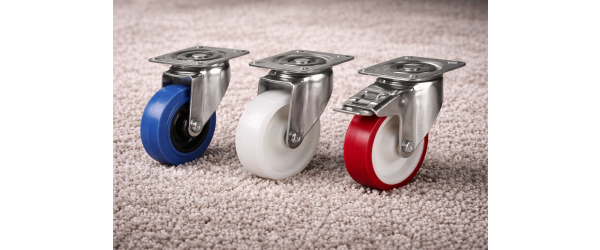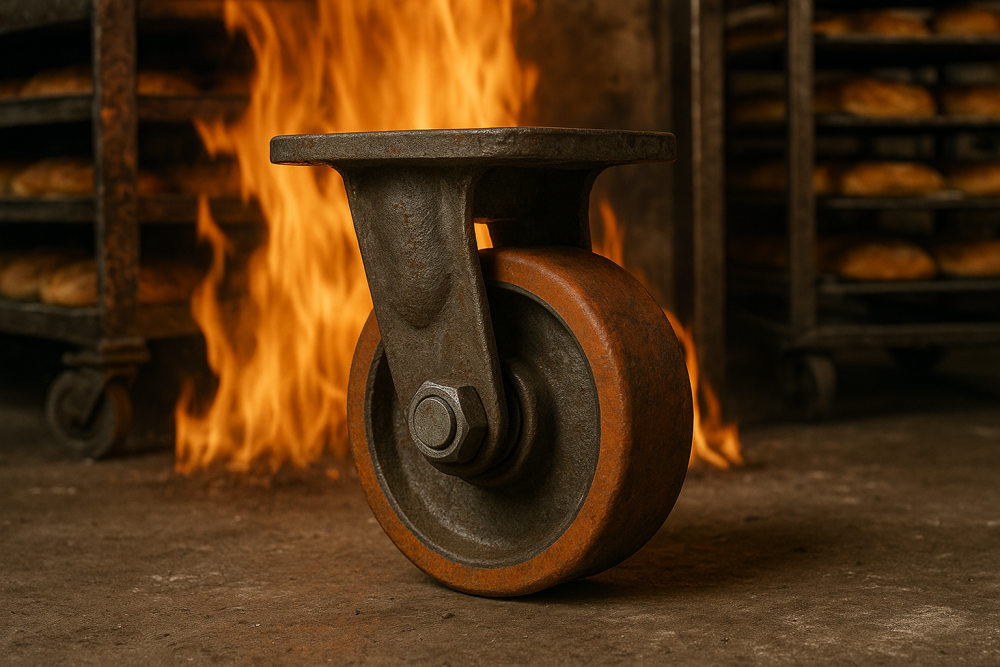
In many industrial environments, extreme heat is a routine part of day-to-day work and is unavoidable. Whether you’re working around ovens, kilns, or in a food processing facility, maintaining reliable operations and in-house transport in high temperatures can be a real challenge and is vital to the processes in your business. Standard castors quickly deteriorate when exposed to heat, leading to cracking, softened material, or even outright failure. That’s where high-temperature castors come in – these are designed to keep things moving even in the highest temperatures.
Why High-Temperature Castors are Vital
Ordinary castors are often made from rubber, nylon, or polyurethane – materials like this often start to break down at temperatures above 80°C. In contrast, high-temperature castors are built using materials that withstand extreme heat without losing integrity or mobility. This is crucial for maintaining safety and efficiency in environments where heat exposure is a common part of the workplace. Not doing your research or going down the cheap route could lead to safety hazards or pricy problems.
Without the right castors, trolleys and other equipment can totally seize or become unsafe to use due to the loss of stability. This can cause expensive delays and create
heightened safety risks for workers in an already risk-prone environment. Investing in quality castors ensures the foundation, strength, and mobility stay present when exposed to repeated temperature differences.
Where High-Temperature Castors Are Used
You’ll find these specialist castors across a range of industries, including:
- Food manufacturing and baking – where racks, trays, and trollies are wheeled in and out of hot ovens.
- Industrial and automotive paint shops – where certain processes expose equipment to heat.
- Laboratories and autoclaves – where sterilisation equipment operates at extremely high temperatures and conditions.
- Metalworking and foundries – where materials and tools are handled near furnaces or heated machines.
Each of these workplaces requires castors that won’t soften, stick, or release fumes when the temperature rises. Safety, reliability and efficiency will all remain stable if using the correct castors.
What Materials Can Actually Withstand Heat?
Castors Online offers a wide range of high-temperature application castors designed for various demands. The material choice can determine both temperature resistance and the overall performance in such environments:
- Phenolic resin wheels – robust and non-marking, suitable for temperatures up to around 250°C. They provide smooth movement and excellent load capacity.
- Nylon high-temp wheels – ideal for slightly lower temperature ranges (up to about 180°C), offering strength and chemical resistance.
- Cast iron wheels – the go-to option for the harshest, hottest industrial environments, capable of handling sustained heat above 300°C without deforming.
- High-temperature rubber – combines flexibility and resilience for medium-heat applications, such as food service or light manufacturing.
All are designed with precision bearings and heat-resistant lubricants to ensure smooth operation, even after repeated exposure to extreme heat.
Key Features to Look For
When choosing high-temperature castors, consider these factors:
- Temperature range – always match the castor’s rated temperature to your working environment. Not checking this can be dangerous and inefficient.
- Load capacity – heat can affect the strength of materials, so ensure the castor supports the required weight under hot conditions for the same reasons as before.
- Floor type – some materials (like metal) can mark or damage certain floors when heated, so ensure this isn’t the case by checking specifications.
- Wheel bearings and lubricants – look for heat-stable bearings and greases that won’t break down during continuous operation.
- Braking options – many heat-resistant castors include brakes suitable for hot surfaces – make sure this is correct before exposing them to dangerous, high-temperature environments.
Safety and Maintenance in Hot Conditions
Even the highest grade of castors benefits from regular inspection. Check for cracks, wheel surface wear, and stiffness with the bearings - especially after prolonged or repeated high-heat exposure. A maintenance routine helps prevent failures that could lead to costly downtime and prevent any serious accidents.
If your equipment regularly transitions from hot to cool areas, consider wheels that handle thermal shock well, as sudden temperature changes can seriously affect some materials and their functions.
Selecting the Right Castor for the Right Job
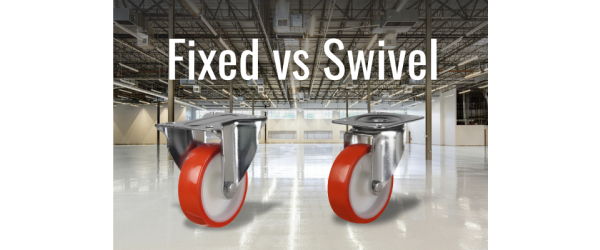
At Castors Online, high-temperature models are available in various configurations, including fixed, swivel, and braked castors, allowing you to adapt your setup for what suits you – manoeuvrability or stability
For example:
- Phenolic swivel castors are perfect for bakery racks that need to move freely between ovens and prep areas.
- Cast iron-braked castors offer excellent control and durability in metalworking or paint-curing environments where control is not only key. It’s essential.
You can explore the full selection of high-temperature application castors to find specifications that suit your industry’s needs.
Conclusion
Working in a hot environment brings unique challenges and problems for a business. At Castors Online, we think equipment mobility shouldn’t be a pain for you and your business. High-temperature castors are an essential investment for any operation that relies on transport in high-temperature environments. By choosing our castors that are designed to handle the extreme heat, you not only extend equipment life and lower life time cost, but more importantly, you can ensure safety and efficiency for your staff members.