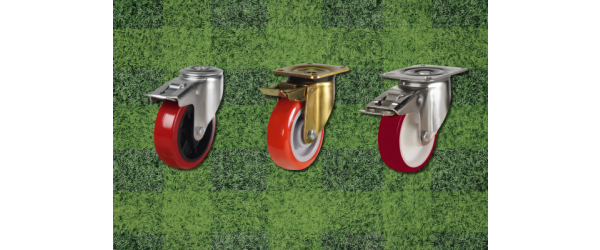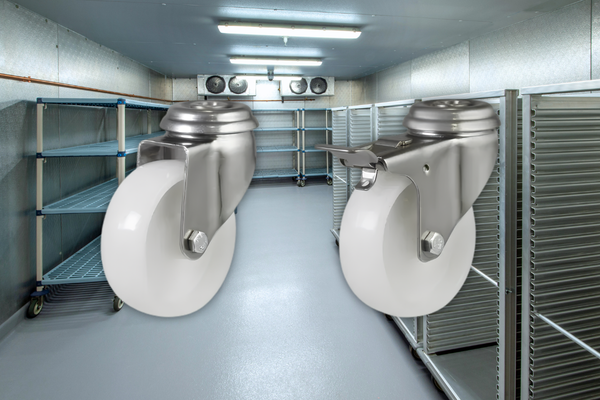
Compared to an ordinary warehouse, commercial freezers and cold rooms present a very different operating environment that comes with its own challenges. Trolleys, racks and food-processing equipment may all spend long periods of time below normal temperatures and sometimes they need to move between cold and warmer areas.
When selecting castors for your equipment being used in colder areas, there are some extra aspects to consider to make sure they perform safely and efficiently.
What Happens to Castors at Low Temperatures?
There are a few possible changes that can happen to castors when they are in the cold:
- Some wheel compounds become harder or more brittle.
- Temperature changes can cause condensation.
- Moisture can affect bearings, axles and castor housings.
- Wheels that perform well at room temperature may behave differently in a freezer.
Where Are Low-Temperature Castors Used?
There are many possible uses for low-temperature castors including:
- Commercial cold rooms
- Walk-in freezers
- Food production and processing
- Refrigerated warehouses
- Catering and hospitality
- Food and ingredient trolleys
Choosing the Right Wheel Material for Cold Rooms
Choosing the right castors for a low-temperature environment is not simply a case of deciding between rubber, polyurethane or nylon. The actual temperature of the working environment matters just as much as the wheel itself.
A chilled storage room operating a few degrees above freezing presents very different challenges from a commercial freezer running at -20°C or below. Special low-temperature castors can be supplied at an extra cost for operating in ranges down to -40°C and up to +80°C.
For this reason, wheel material should be chosen according to the way the equipment will be used. True freezer applications should be treated as a specialist specification.
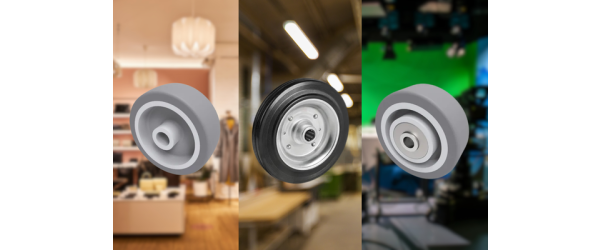
Rubber Wheels
Due to the softer material, rubber wheels are suitable for applications where quieter running and shock absorption are important. This could include food preparation areas, catering environments and refrigerated storage rooms where equipment is moved frequently.
However, as temperatures fall, rubber compounds can become harder, which can reduce some of the cushioning and grip.
Rubber wheels are generally best suited to chilled environments rather than deep-freeze conditions.
Polyurethane Wheels
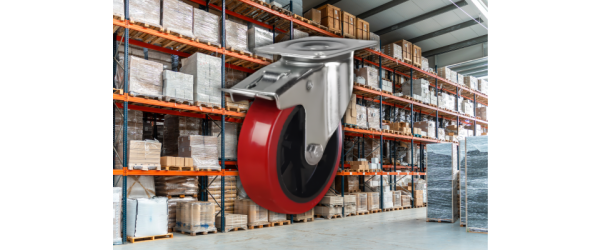
As polyurethane wheels provide a balance of durability, load capacity and floor protection, they are widely used on industrial and commercial equipment.
Polyurethane wheels are a good choice if your equipment needs to be moved regularly, as they generally offer lower rolling resistance and greater resistance to wear.
They are a strong all-round choice for busy chilled and cold-storage environments, especially if the load is heavier and needs to be moved regularly.
Similarly to rubber wheels, however, it should not be assumed that every standard polyurethane castor is suitable for regular use inside a commercial freezer, as at lower temperatures, the complete castor specification becomes increasingly important.
Nylon Wheels
Nylon wheels are a practical choice for environments where moisture is more present, such as food production, refrigerated storage and other hygiene-sensitive applications. The material has low water absorption, and the hard, smooth wheel surface is easy to clean.
However, the material of the wheel is only one part of the castor. The material of the bracket, axle and other components should also be considered for environments where frequent cleaning or moisture is expected.
Temperature Changes and Corrosion
Trolleys, racks and mobile equipment may not always be kept at the same temperature. They can often be regularly moved between a cold room or freezer and a warmer working area.
These temperature changes can cause condensation to form on the cold metal components, and over time, repeated exposure can increase the risk of corrosion around the castor bracket, axle, swivel assembly and bearings.
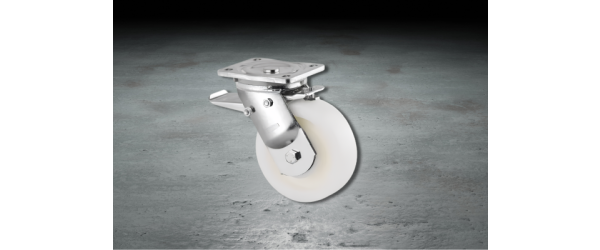
Stainless steel castors can be a suitable choice, as they offer greater resistance to corrosion than standard plated steel. We stock stainless steel castors with different wheel materials, so there are multiple options depending on what your equipment is being used for.
What Else Should You Consider?
Before making a decision, you should also consider:
- The lowest temperature the equipment will be exposed to
- The total load the castors will need to support
- How often the equipment will be moved
- The floor material
For chilled environments, rubber, polyurethane or nylon castors may be suitable depending on the application. For more extreme temperatures and commercial freezers, contact us to arrange specialist low-temperature castors suitable for temperatures down to -40°C.