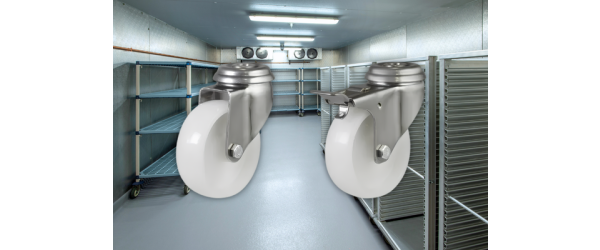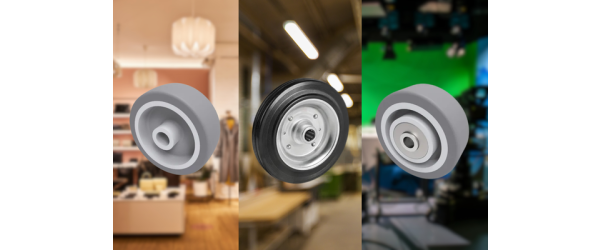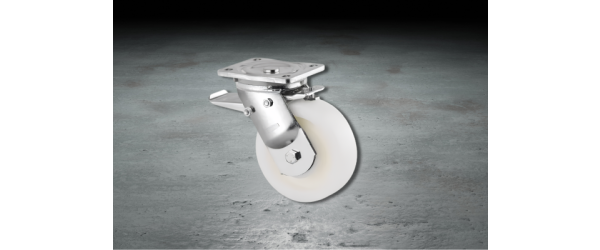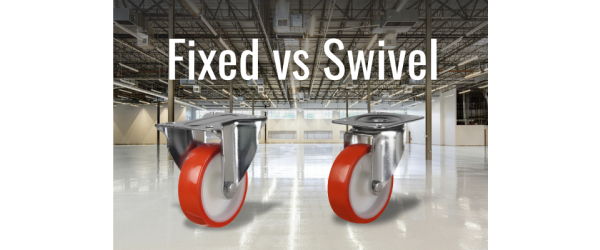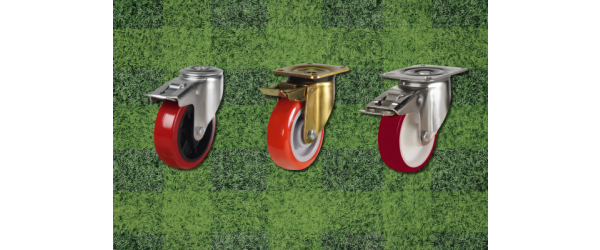
Castor wheels are not universal. While many of them may look similar, they can have different fixing systems, measurements, load ratings, wheel materials and more.
To find a suitable replacement, all of these aspects will have to align. If only the wheel is worn, you may be able to replace it while keeping the existing castor bracket. However, if the bracket, swivel mechanism, fixing or brake is damaged, the whole castor will usually need to be replaced.
Identify the Castor Fixing Type
One of the most important aspects to consider when replacing a castor is the fixing type that allows the castor to attach to the equipment. It is important because even if two castors have the same wheel size and load rating, they will not be interchangeable if the fittings are not the same.
4 Bolt Plate Fitting
A 4 bolt plate fitting has a rectangular or square mounting plate with four holes. When choosing a replacement, check the measurements for the plate length and width, along with the bolt-hole diameter and distance between the bolt-hole centres.
Single Bolt Hole Fitting
A single bolt fitting has one fixing hole at the top of the castor. A separate bolt passes through the hole to secure the castor to the equipment.
Threaded Stem Fitting
A threaded stem fitting screws directly into a compatible threaded socket. Both the thread diameter and stem length must match. We offer options including M8 x 16mm and M10 x 16mm, so it is important to measure the existing stem diameter and length before ordering a replacement.
Peg & Socket Fittings
Peg and socket fittings are commonly used on furniture. The peg attached to the castor pushes into a compatible socket. We offer both standard peg and socket fittings as well as wood stem and gripneck socket fittings designed specifically for wooden furniture.
Check the Castor Measurements
Now that you have identified the fixing type, you will need to check the castor’s measurements.
The essential measurements you will need are:
- Wheel diameter
- Tread width
- Overall height
Overall height is particularly important because you can easily have two castors with the same wheel diameter but different bracket heights. If you fit castors of different heights, you can leave the equipment uneven, which will affect its stability and safety.
Read our step-by-step guide to measuring a castor for further guidance.
Check the Load Rating and Wheel Material
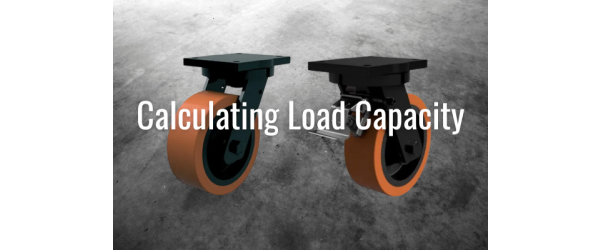
When calculating the load rating for your castors, you need to calculate the total weight, including the maximum weight your equipment will be carrying during normal use. Then divide this figure by three to get the minimum load rating for each castor. You should divide by three rather than four to take into account uneven floors and unsteady movement that may mean only three of your castors are supporting the load. It is recommended to add a safety margin to allow for additional weight and movement.
Wheel material also needs to be considered:
- Nylon – Durability and heavier loads
- Rubber – Quieter movement and shock absorption
- Polyurethane – Durability and floor protection
- Pneumatic wheels – Uneven surfaces
Are Office Chair Castors Universal?
Even though office chairs often look similar, they can have different stem sizes. To find out what size you need, remove one of your existing castors from the chair to get an accurate measurement.
Should You Replace One Castor or the Whole Set?
If an appropriate match is available, one castor can be replaced.
However, replacing the whole set is recommended if the new castor has a different overall height, the existing wheels are worn or the original model is unavailable.
While castors are not universal, by checking the fixing, measurements, load rating and wheel material, you can find the correct replacement. If you still aren’t sure, contact us and our friendly team can help guide you to the best castors for your application.